The continental United States is massive, spanning over 3.1 million square miles, much of which was unconquered until the late 1800s. But it isn’t the United States’ size that makes it such a marvel, but its diverse ecology and the stories of men that lost their lives trying to understand just a bit more about what was out there.
Little of our American history gives proper attention to how challenging it was for countless individuals to embark on these journeys throughout the 1800s, men like John Wesley Powell whose stories come across as more of a movie script than they do as facts from a textbook.
Beginning in 1869, Powell’s journey to the Grand Canyon came at a time when maps labeled the area as simply unexplored, acknowledging its massive size, desolate landscapes, and the presence of the Colorado River that raged across its dry landscape, yet ignorant of the harsh realities this region imposed on unassuming visitors.
Powell’s expedition would embark with ten men setting down the Colorado River in wooden rowboats, men like William H. Dunn, who subsisted off of fat venison and sported long robin hair that fell down to his back, due to “a sublime contempt of shears and razors.” It is hard to overstate just how well suited Powell’s crew of Civil War veterans and rugged journeymen was for exploring an environment as alien and unforgiving as the Grand Canyon.
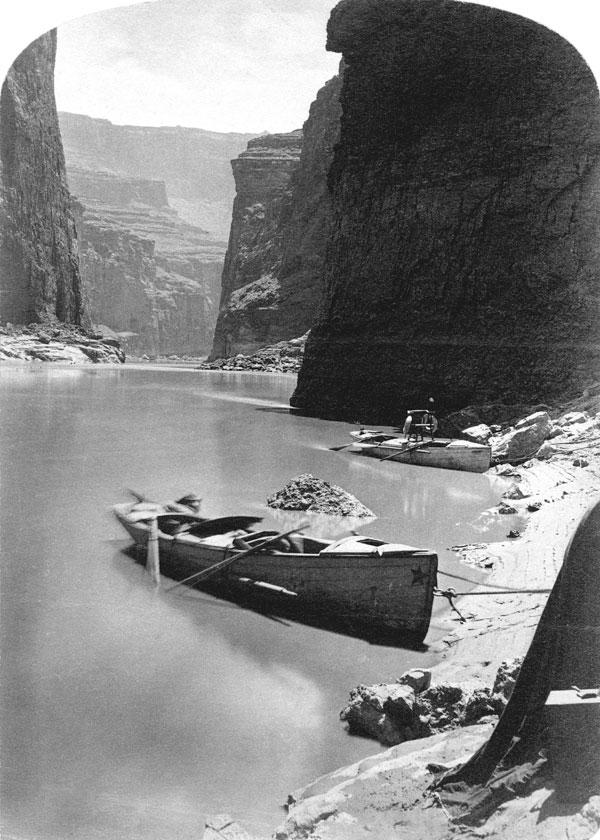
Looking at this story today, it’s easy to imagine why such a trip would seem destined for failure given our understanding of the harsh environment, but even for the time period, the expedition was deemed too difficult or infeasible. In Edward Dolnick’s chronicles of the 1869 expedition, he wrote that on the day Powell men set out for the West, his hometown newspaper reported: “It would be impossible for a boat constructed of any known material, upon any conceivable plan, to live through the canyon.”
Powell’s crew faced countless setbacks, like their lead ship the “Emma Dean” capsizing, with critical supplies like blankets, guns, and a barometer sinking into the rapids. They endured nights of heavy rain, leaving Powell and his men forced to sleep atop the rocks of the Grand Canyon. At one point, Powell was saved by another crewmate’s outstretched pants, pulling him to safety from a steep drop off a cliff face.
Despite their hardships, six of the ten men returned three months later. Relatively unscathed and possessed of a vast knowledge of this new territory, Powell went on to live an extraordinary life, leading more expeditions and even serving as special commissioner for the Department of the Interior. Powell’s work expanded our knowledge of this mysterious land’s geology, geography, and water resource potential, educating Americans in the years that followed.
But our story begins nearly three decades later in 1893, at the second International Irrigation Conference, where the fate of America’s arid Western lands was to be decided on by railroad barons and land owners. Powell, in obvious opposition to the visions being proposed, stood in front of hundreds before being booed off the stage, shouting: “Gentlemen, you are piling up a heritage of conflict and litigation over water rights, for there is not sufficient water to supply the land.”
133 years later, little has changed. The environment of the southwest continues to undergo an extended process of aridification with numerous regions under the persistent threat of drought, and reasonable men like Powell are few and far between. In 2026, the chair of the Commissioner of the Reclamation has remained officially empty since September 2025, and important rulings like the 2007 Interim Guidelines, 2019 Drought Contingency Plan, and Mexico water agreements are set to expire by year’s end.
As recently as June 8th, a group of water providers, agricultural producers, conservation organizations, and numerous other stakeholders wrote to Congress asking for a targeted federal investment of $2 billion dedicated to the Colorado River basin, as Water Year 2026 has proven to be one of the “most challenging in over a century of record keeping.”
The Colorado River, which supplies water to over forty million individuals, five and a half million acres of farmland, thirty tribal nations, and even two Mexican states, continues to be bled dry by interstate infighting, while minimal attention is given to the significance of its rapid decline with each passing year.
Americans shouldn’t have to resort to moving away from the southwest, abandoning idyllic small towns for large cities devoid of water scarcity, those like Phoenix or Las Vegas. The notion that all we can do is conserve and restrict access to water until it inevitably runs out is unpatriotic, standing against centuries of America’s success in conquering these impressive regions. Additionally, our inability to enact policy that pushes America towards terraforming our vast lands not only threatens its hundreds of millions of citizens today, but the generations we’ll hand off this land to.
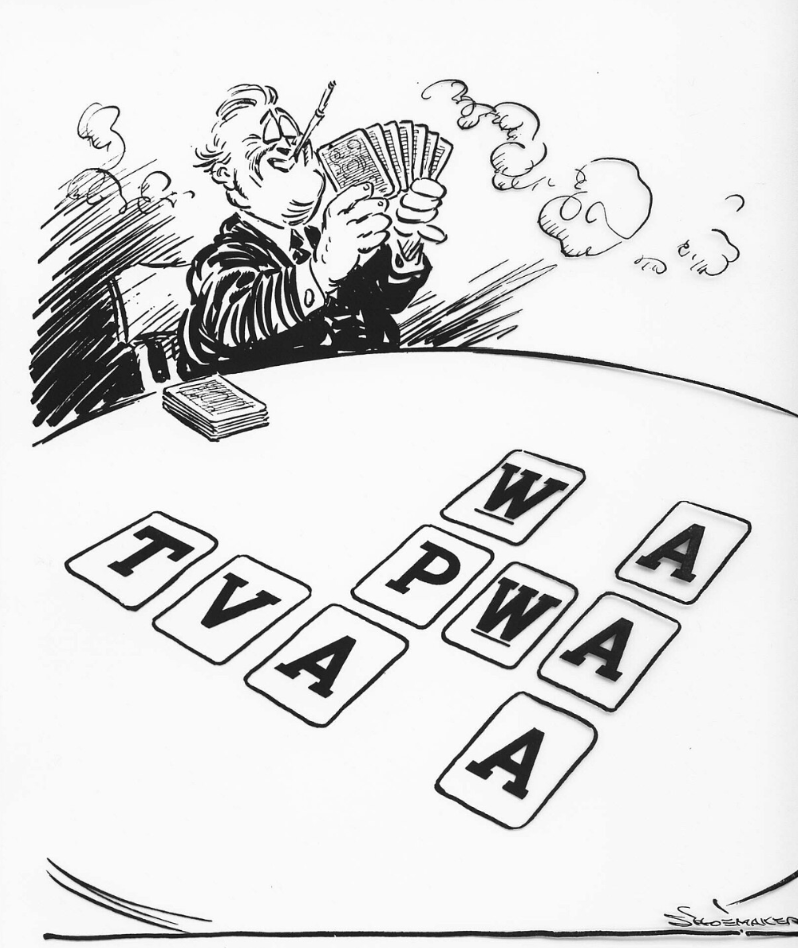
As some of our finest rivers in the southwest face certain degradation, with the potential for permanent disruption of vital American regions, there exists only one option: the formation of a Western Water and Power Authority (WWPA), chartered by congress via the WWPA Act as a wholly-owned federal corporation, tasked with creating water abundance in the southwest through a combination of proven technology like solar-powered desalination and inventive institutional reform, drawing on historical precedents like the Tennessee Valley Authority (TVA) and Eisenhower’s Interstate Highway System (IHS).
Importantly, the WWPA Act would earmark roughly $600-750 billion for 25-30 years of construction, creating an annual stimulus of $20-25 billion dedicated solely to creating net-new water in the US, ending the scarcity mindset, interstate bickering, and putting an end to archaic water rights dynamics once and for all.
Despite its dry and unforgiving exterior, the southwest is quite beautiful and a major part of American history. Whether it was the Gold Rush pulling hundreds of thousands across the country to California, the Manhattan Project’s secrecy within the borders of New Mexico, or the allure of Route 66 - some of America’s most valuable history stems from the western half of the United States.
It should be uncontroversial that preserving such a storied landscape is a matter of national importance, one on par with securing our borders or ensuring military veterans are treated properly after completing their service. Yet preserving one of our nation’s most storied environments frequently comes off as an afterthought, or a can we continue to kick further down the road for subsequent generations to deal with.
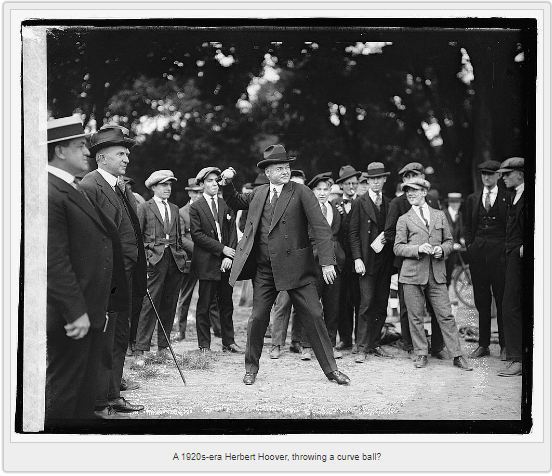
Just 29 years after Powell’s words of warning went unheeded, Herbert Hoover’s 1922 Colorado River Compact ordered seven states (Colorado, New Mexico, Utah, Wyoming, Arizona, Nevada, and California) to separate into two divisions, dividing the Colorado’s water between the upper and lower halves of the basin states, splitting 15 million acre-feet evenly (with an additional 1.5 million for Mexico).
The compact would lead to the broader irrigation of the American southwest and heightened significance of the Bureau of Reclamation throughout the early 20th century, with these tailwinds contributing to 1928’s Boulder Canyon Project. This period is looked back on as a kind of golden years - the best of the Reclamation Era, known for projects like the Hoover Dam, All-American Canal, Colorado River Aqueduct, Grand Coulee Dam, among many others.
The “build at all costs” attitude began to weaken after conservation groups like the Sierra Club achieved their first major win in 1956, blocking the approval of the Echo Park Dam, a massive 529 foot structure which boasted a capacity for 6.1 million acre-feet of water. The Sierra Club went on to become something of a cultural phenomenon, blocking construction of other dams and continuing to advocate for more stringent regulation in the years to come.
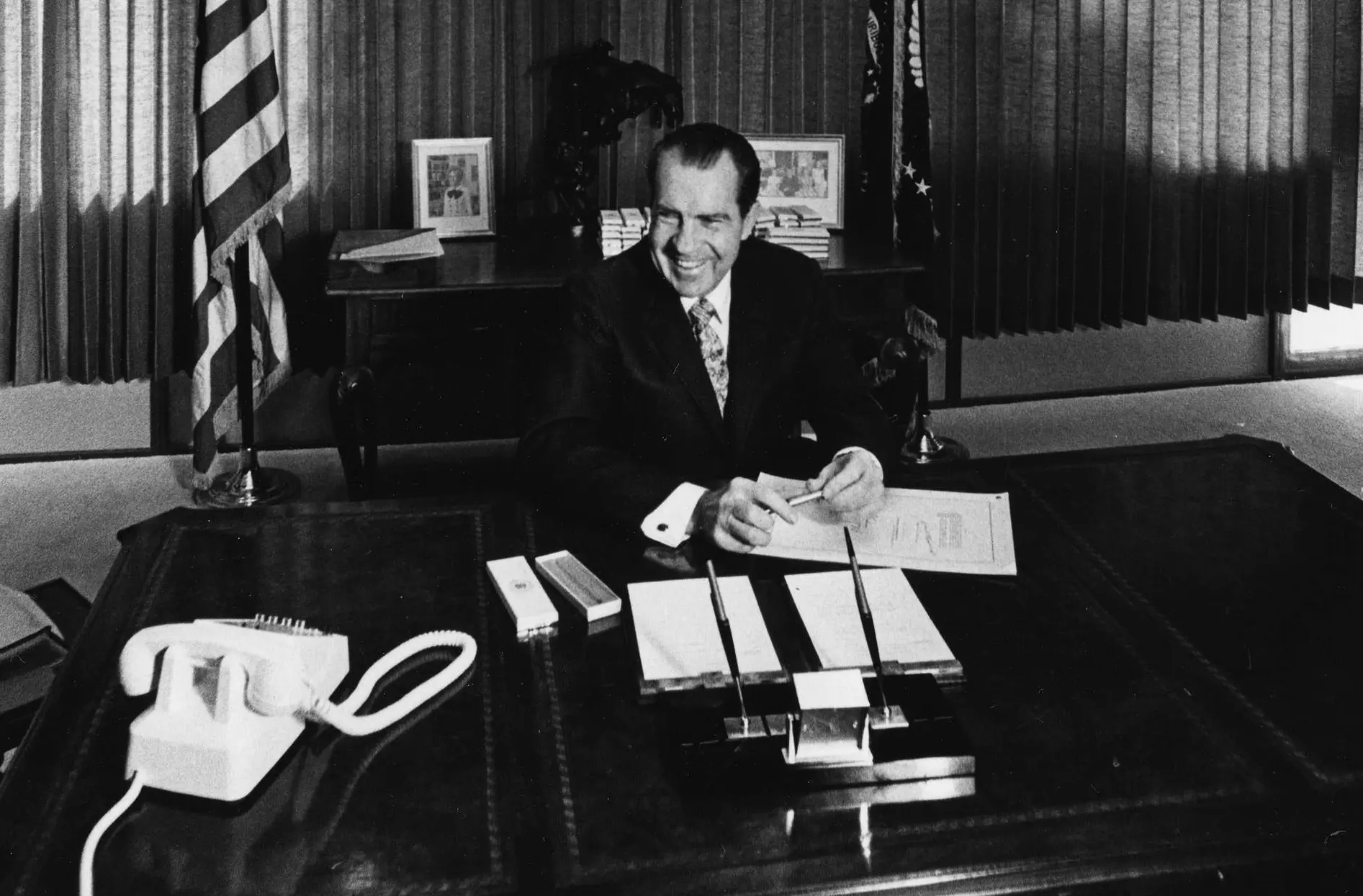
When Richard Nixon signed the National Environmental Policy Act (NEPA) into law on the first day of 1970, the restoration era had officially begun. NEPA was formed as a response to widespread backlash after events like the Cuyahoga River Fire and the Santa Barbara oil spill of 1969, widely criticized instances that contributed to environmentalist attitudes taking hold.
NEPA required federal agencies to weigh the environmental consequences of their decisions, necessitating the drafting of environmental impact statements (EISs) for “major federal actions” that pose significant harm. Today, NEPA applies to almost every federal action, whether or not it actually poses any meaningful harm.
The California Environmental Quality Act (CEQA) signed by Governor Ronald Reagan in 1970, is equally important to the detriment of American Industrialism. CEQA requires additional environmental impact analysis, mandating the adoption of all feasible measures to mitigate potential impacts.
A 2015 study showed that nearly 85% of CEQA lawsuits come from groups with no history of environmental advocacy - a similar travesty on par with nearly 3x as many energy projects stuck in NEPA review being clean energy projects. Congress couldn’t have guessed that NEPA would initiate private standing and become a roadblock for all types of infrastructure buildout, not just the visibly harmful ones. Prior to Scenic Hudson v. FPC, your interest in environmental reform needed to exist within legal jurisdiction, but afterwards, anyone who claimed an interest in nature was given legal right of way.
Ben Schifman argued that the mere existence of a force like NEPA imposes an invisible tax on all infrastructure investment, where uncertainties around approval increase the cost of capital, discourage smaller projects from filing for proposals, and redirect resources from construction to litigation defense. When every federal action touches NEPA, more routine construction projects and these aforementioned clean energy projects are forced to reckon with the Administrative Procedure Act’s default remedy of nullifying the agency’s decision, rather than offering steps to align a project around these outdated standards.
Zach Liscow said that effort shouldn’t be spent on dismantling NEPA, but many of the “mini-NEPAs” that are often more responsible for setbacks across the entire country.
A 2017 study asked manufacturing stakeholders what the greatest regulatory barriers to development are, finding that the Clean Water Act (CWA) and two Clean Air Act (CAA) provisions were the top three biggest hindrances - NEPA failed to make the top ten. CAA is emblematic of the tangled mess of federal, state, and local jurisdictions that frequently bump heads.
Thomas Hochman has discussed environmental permitting reform at length, pointing out the absurdity of these systems. Permitting is first and foremost handled by states, who develop state implementation plans (SIPs), in which these SIPs are subject for review by the EPA, where even successful SIPs are still subject to the looming threat of rejection by the EPA even after this state-level approval.
The Clean Water Act (CWA) is most relevant to anything being built under WWPA. Section 401 lets a state certify, or refuse to certify, that federally permitted projects meet its standards, functioning as a state veto over federal approvals. Over time, states have used 401 as a means of delaying projects for reasons entirely outside the scope of water quality. Section 404 can add two or more years of deliberation and tack on hundreds of thousands in project costs on a per-permit basis - disastrous for projects like the Central Arizona Project which cross hundreds of miles of waters in the United States.
The end result is a system where the average EIS takes 4.5 years to clear, and numerous incentive structures reward those on the side of penalizing new infrastructure.
Small wins have come in the form of Trump revoking the 1977 executive order which gave ultimate regulatory authority to the Council on Environmental Quality, but even this is just a small step towards full reform. Environmental standards are worth keeping in America, but the process that’s detached from them is far from what Nixon and Congress intended when creating NEPA. Reading about the United States’ tangled web of environmental agencies and permitting requirements should frustrate anyone, especially those that still believe we can turn this great country into an even greater one.
The dynamics within California’s Imperial Valley show how water law itself rewards waste, where “use it or lose it” rules allow the state and irrigation districts to steal unused water from farmers guilty of not putting it to beneficial use. This results in mass growing of low-value crops like alfalfa mattering more than actual water conservation, a backwards system that has led to nearly half of Imperial Valley’s 500,000 acres of irrigable land being taken up by alfalfa.
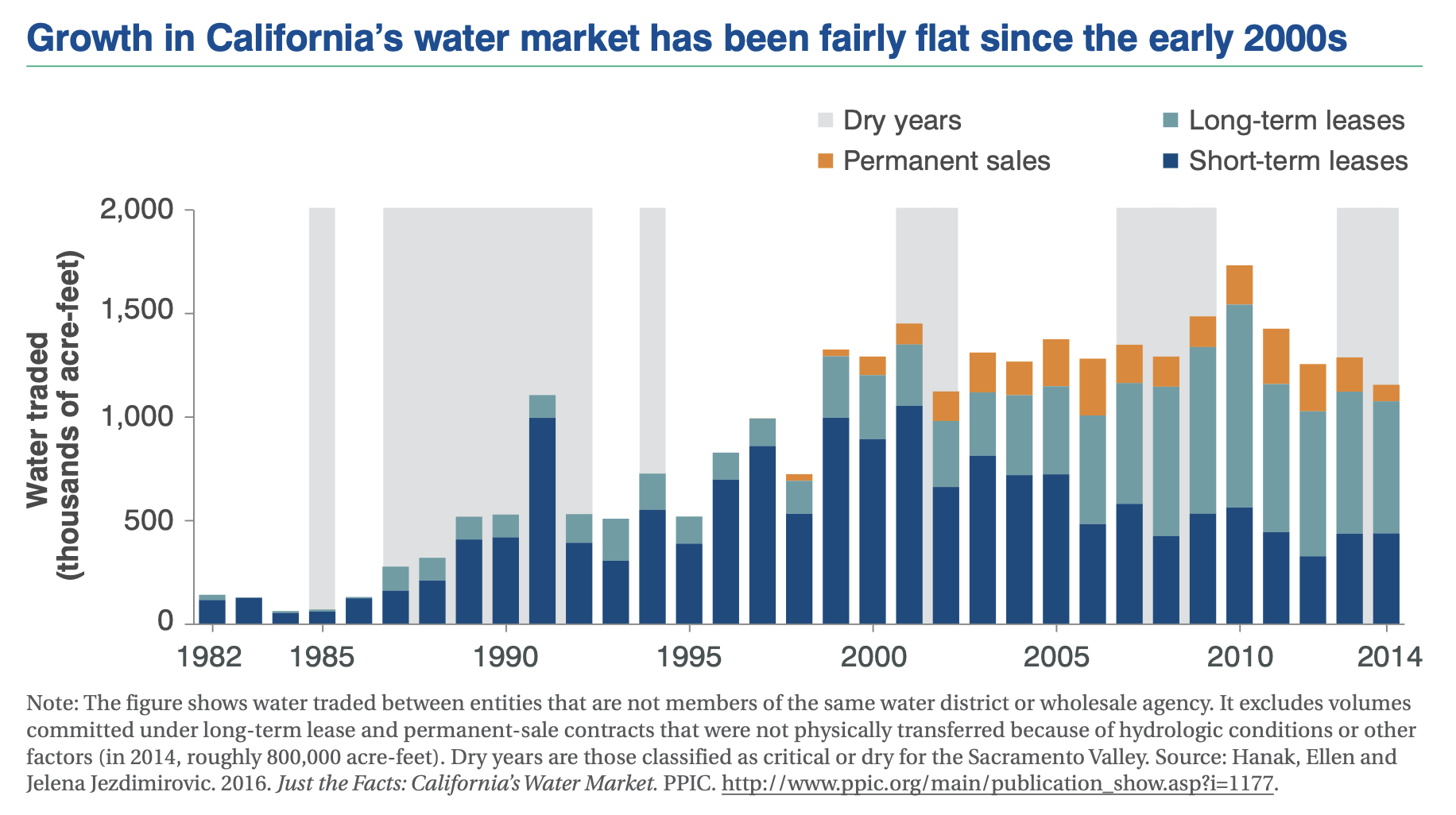
Water markets exist to mitigate this, though even larger markets - like California’s - barely process more than 200,000 acre-feet per year, down nearly 50% since the mid 2010s when the Salton Sea mitigation program was discontinued.
Permitting is responsible for much of the rot, but the larger issue stems from water legislation being designed around a supply that was largely never there, just as Powell initially warned. The 1922 compact that divided 16.5 million acre-feet amongst the basins and Mexico drew this figure from the region’s wettest decades in history. Six years prior, hydrologist Eugene Clyde LaRue had concluded that the river’s flows were insufficient to satisfy these demands, with politicians failing to heed his warnings or purposely ignoring them. Even today, upper and lower basins measure depletions differently, contributing to frictions over the smallest requests or new legislative proposals.
Current flows of the Colorado River run out to just 12-13 million acre-feet per year, with this number continuing to drop given widespread declining snowpack runoff; 2026’s median peak snowpack arrived in early March rather than its typical April.
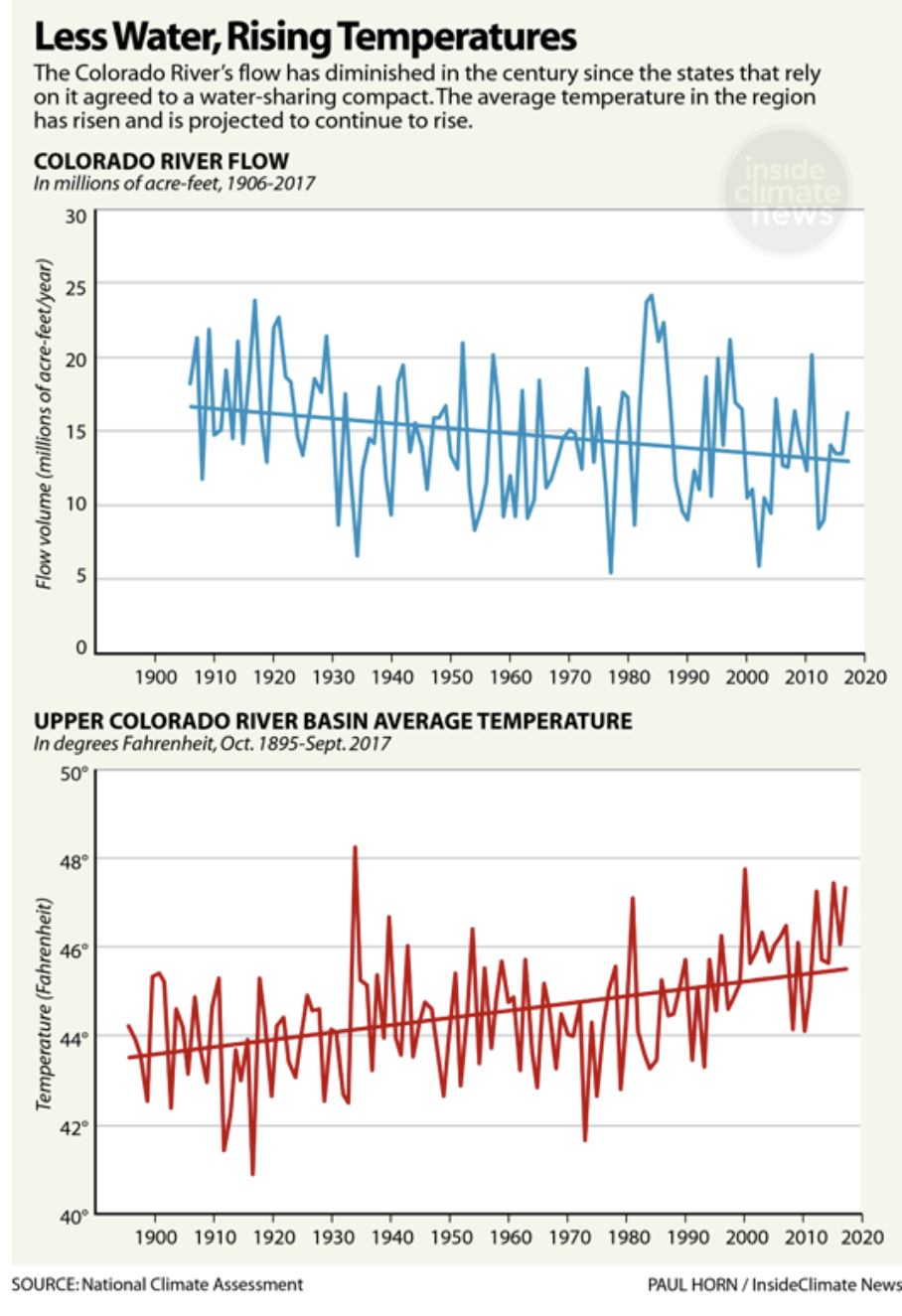
In 2023, Dale Maharidge documented the Colorado River’s decline in the New York Times, describing the river’s growing “mud glaciers” and the impact this would likely have if immediate action wasn’t taken. Fifty years prior to Dale’s warnings, then-commissioner of the Bureau of Reclamation Floyd Dominy spoke of these mud glaciers saying: “We will let people in the future worry about it.”
Powell and Mead, the two largest reservoirs in the United States, reside at roughly a quarter of capacity. The Bureau of Reclamation reported that Powell’s water year minimum probable inflow is forecasted at just 2.78 million acre-feet, and should it decline to below 3,490 feet as projected by August 2026, power generation will falter. Even previously trustworthy flows like snowwater runoffs are sitting at just 13% of historical averages, offering no replacement set against persistent demand. And amongst the seven basin states, water consumption needs to be cut by three to four million acre-feet per year.
The Bureau’s comments are not hyperbole coming from a federal agency desperate for a bailout, they have already received plenty of funds, yet little has been done to reverse the damage. The Biden-era Bipartisan Infrastructure Law (BIL) earmarked a total of $8.3 billion for water infrastructure projects, with over 670 projects having received over $5 billion since its signing.
In addition to the funds delivered by the BIL, the Inflation Reduction Act (IRA) of 2022 promised another $4.6 billion for “drought mitigation” and over $4 billion of this not going towards technology that can solve the drought problem, but Colorado River Conservation Payments of roughly $521/AF of non-use funds, quite literally burning billions to tread water.
In some cases, tens of millions were allocated specifically towards planning and permitting, funds entirely distinct from the pool that would go towards construction of new infrastructure. The most egregious example came from the Pure Water Southern California facility receiving a $99.2 million specifically earmarked for planning and design, while facility upgrades have yet to begin construction.
Pointing fingers at BIL and IRA’s shortcomings is by no means an indictment of water conservation policy, however, in the absence of novel solutions to drought and dying rivers, immediate action should be preferred over empty spending (much of which deserving an essay of its own) that only serves to buy us a small amount of time before certain ecological disaster.
Political shortsightedness and permitting traps have resulted in an America where it’s not only impossible to build, but an America where the presence of this legislation actually blocks the possibility of putting a dent into solving our environment’s troubles, limiting innovation every step of the way.
Casey Handmer - ex-NASA physicist and founder of Terraform Industries - has written extensively on the benefits of solar-powered desalination to convert sea water into fresh water via reverse osmosis (known as SWRO). This technology funnels sea water through high pressure systems to separate fresh water from salty brine, eventually separating these inputs through a pressure exchanger and filtering out the newly fresh water through a low pressure valve. Modern SWRO systems across the world are very efficient, producing “a cubic meter of fresh water for just 2.5 kWh of electricity.”
WWPA calls for a much larger scale, but America already has a desalination plant of its own as a proof point that we can build these structures.
The Carlsbad Desalination Plant which was constructed in 2015, produces roughly 56,000 acre-feet per year, enough water for hundreds of thousands. It would be easy to celebrate Carlsbad as a win, yet the project actually commenced 22 years prior to its completion date, with hurdles imposed by permitting and five separate lawsuits slowing the project down. In fact, Carlsbad actually exists as an optimistic outcome relative to one of its more infamous peers, Poseidon Water’s proposed seawater plant at the AES Huntington Beach power station.
Proposed in 1998, this plant was slated to output a modest 56,000 AFY. The project ultimately spent 24 years wrapped in litigation, costing over $100 million in legal fees as they fought against the California Coastal Commission (CCC), California State commissions, and regional water authorities until a defeat in 2022, after the CCC voted unanimously to deny with little explanation.
Outside of the United States, reverse osmosis has risen as the global standard for modern desalination - roughly 80% of global desalination capacity - due to its energy efficiency over alternatives. The Arab Gulf states alone make up 60% of global desalination capacity, where these regions have scaled infrastructure since the 1960s to accommodate growing populations and address risks of drinking water scarcity. Current global SWRO production sits at over 15 million acre-feet per year, though many of these plants primarily utilize SWRO to produce fresh drinking water, not for terraforming purposes.
While America’s natural resources are generally viewed as nearly infinite, they certainly are not. Water scarcity in the southwest is targeting not only the agricultural sector, but Americans that are being told to limit their water consumption. The need for America to implement SWRO grows with each passing year and the literature supporting its buildout already exists, as well as countless companies that regularly deploy the necessary components to solar SWRO at scale every year.
Implementing solar-powered SWRO at a massive scale in the US relies on an abundance of land to build solar panels on, batteries that decline in cost every year, and a large amount of funds to build these plants. Much of SWRO’s benefits come from its learning curve, or the rate at which a process becomes cheaper, with the SWRO historical learning rate sitting at roughly 15% and solar between 30-40%. Casey’s 2022 model showed that a 1 GW solar array built on 5,000 acres would cost $1 billion, a desalination plant could be constructed for $3.9 billion, and $1.35 billion for batteries - since then, batteries and solar have become significantly cheaper.
An alternative like nuclear energy might be dramatically more efficient, but it’s much easier to build out solar power in the United States - given the dire (but improving) state of nuclear approvals - and a learning rate of 30-40% which helps WWPA reduce costs as it moves past phase one into later projects.
For $6 billion, this hypothetical plant would produce roughly 710,000 AFY, or one fourth of the Central Arizona Project’s output without needing to divert existing fresh water resources. In addition to net-new water, the producers could charge $500 per acre-foot, or just a little bit more than the government rate for acre-foot ration pricing which the IRA provided $4 billion for. The companies that can achieve this already exist - Tesla Energy for batteries, or NextEra for solar deployment, with a proven track record of over 19 GW located across the continental United States.
The Colorado River isn’t the largest river in North America, but it’s one of the most contested, making it a great candidate for a phase one project of WWPA. A network of desalination plants built around the Salton Sea and its Salton Sink would help remedy the decline - fixing California’s regional “asthma belt” in the process - and give developers access to large amounts of highly salinated water that can immediately be routed to the All-American (Imperial Valley region) and Coachella canal networks. The All-American is one of the largest irrigation canals on Earth, delivering water to over half a million acres and nine cities, stretching over 82 miles throughout southeastern California and bordering Mexico. Similarly massive, the Coachella Canal carries water to the Coachella Valley, delivering water up towards (but not directly to) Los Angeles.
This idea was first discussed by Handmer, with one of the main positive externalities coming from the augmentation of existing water networks - like Lake Havasu’s one million acre-feet that help supply Los Angeles - to shift America from scarcity-driven reallocation of water, to net-new water generation that manages to preserve these existing reservoirs and make use of vital water networks. Even if Handmer’s estimates now fall on the low end given learning rate driven cost reductions in the four years that have followed, it is unlikely for phase one to be as cheap as just $6 billion - this fails to account for linear infrastructure costs, invisible costs, inevitable roadbumps, and growing pains of matching government funds with private corporations.
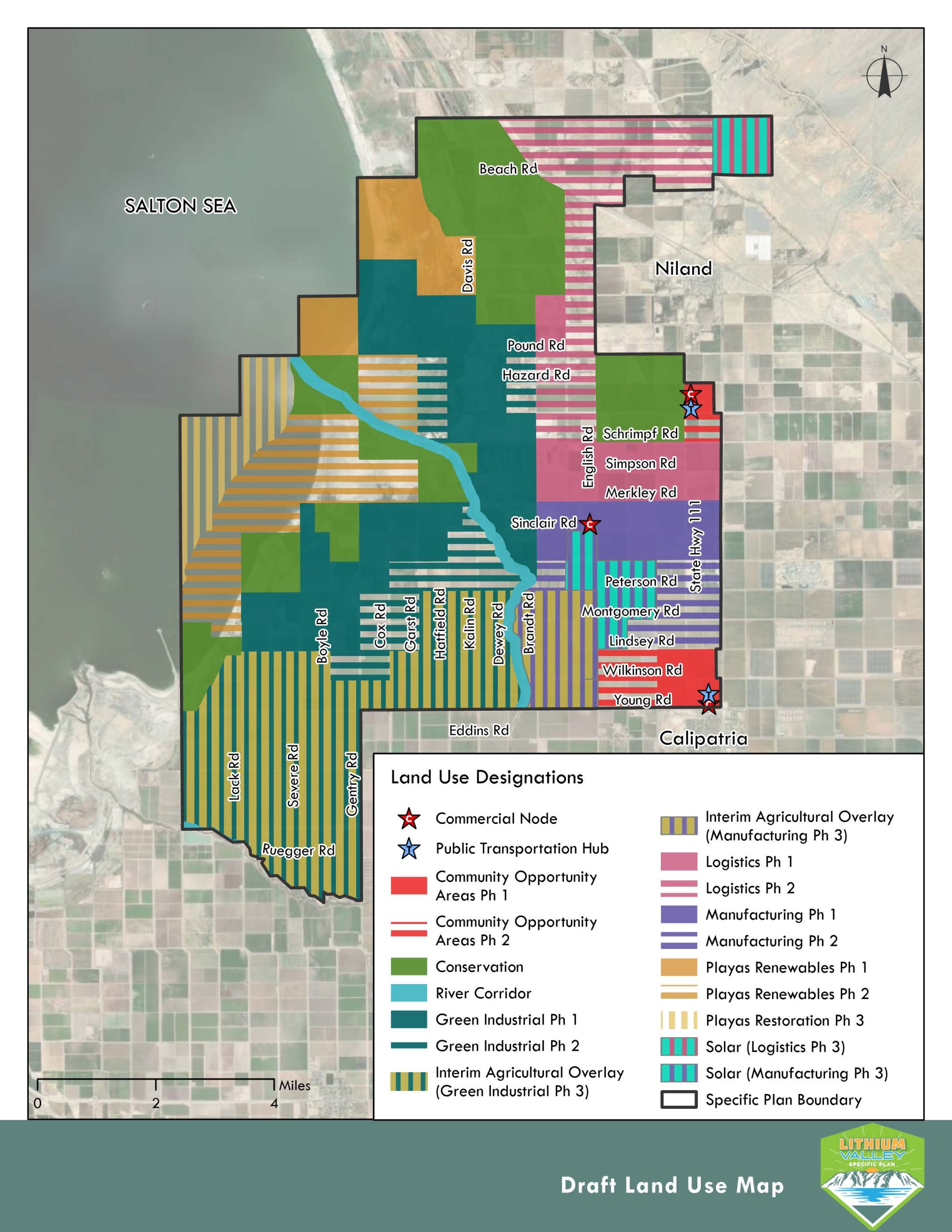
It should also be acknowledged that SWRO has its share of negative externalities, like increased concentrated brine production, though mitigation techniques like chemical treatment or mining of mineral-rich brine can reduce the negative externalities of SWRO at scale, something WWPA would certainly need to ensure to gain goodwill amongst the United States’ citizens. Additionally, it’s been widely known for years that roughly 18 million metric tons of lithium (valued at over half a trillion dollars) remain trapped in the geothermal brine beneath the Salton Sea, making the location perfect for alternative industrial investments to help recoup the costs of WWPA.
The go-ahead of WWPA could finally make California’s “Lithium Valley” a reality and help the United States in its critical minerals race against China, another crucial battleground where industry and permitting legislation routinely bump heads.
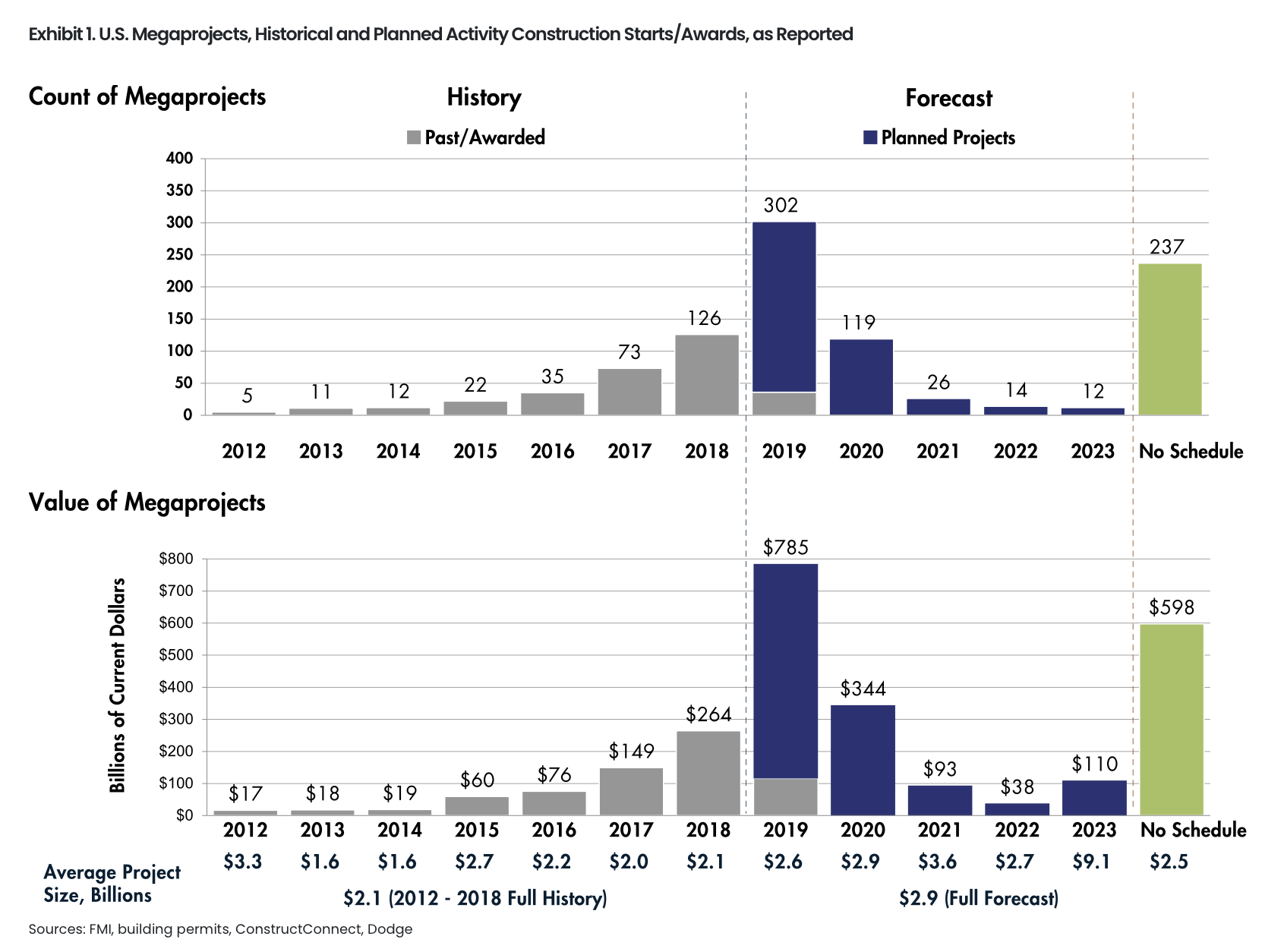
Targeting the Colorado River as a first phase would serve as an example that a mega project of this scale can work, both technologically and politically, and that sorting the needs of seven basin states, tribal constituents, and Mexico is not only possible in the 21st century, but conducive to real change for the southwest’s hydropolitics. Additionally, a mega project like this would reverse another drought - America’s significant lack of such projects in the decades spent toiling under the pressure of environmental legislation.
An argument for terraforming the southwest doesn’t come from a place of disdain or hatred of this arid environment, but from an understanding that more abundant water can facilitate a healthy flourishing of ecosystems that can benefit from more water. Additionally, SWRO is the chosen solution for water scarcity given decades of reallocation have only contributed to more infighting and continued drainage of surrounding reservoirs (like Owen’s Lake and Mono Lake in California), which are not infinite in their supply.
The technology exists to terraform our lands while rebuilding the southwest’s water system entirely for the better - and there are more than enough private companies that can assist on every aspect of the buildout. The hurdles that remain - litigation doom loops and inefficient coordination mechanisms for water rights holders - are arguably more challenging than any faced by developers of monumental projects like the Hoover and Grand Coulee Dams.
Formation of the WWPA wouldn’t be an unprecedented move by the federal government. While America might be relatively youthful compared to civilizations of the past, the country has grown up quickly in its 250 year lifespan, and we can lean on these historical growing pains.
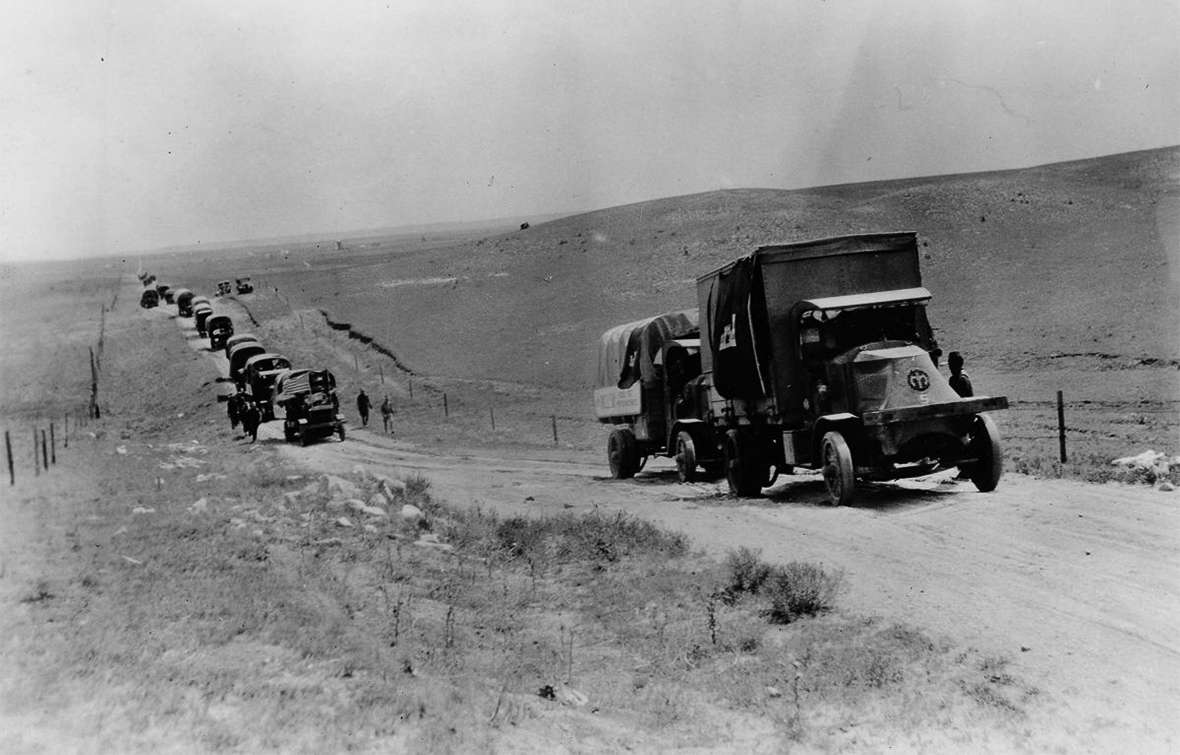
In 1919, a 28-year-old Dwight Eisenhower joined the U.S. Army’s first transcontinental motor convoy - one of the first major cross-country trips - while serving as a lieutenant colonel. 81 vehicles attempted a drive from Washington, D.C. to San Francisco. The convoy averaged six miles per hour, with the trip taking 62 days. Trucks crashed through wooden bridges, and the unforgiving Nevada desert nearly led to these young men dying of dehydration. Eisenhower saw that despite the U.S. being fully explored, we had yet to make a dent in bending the natural environment to our will.
37 years later, Eisenhower signed the Federal-Aid Highway Act, authorizing the formation of over 41,000 miles of a new interstate highway system (IHS). This came without Eisenhower needing to create a new agency or department, opting instead for a simple trust fund structure with 90/10 federal-state cost share, and national standards to be observed by the states themselves.
Value came from the end result of such a project, something the entire country could get behind and visualize from the start. While WWPA doesn’t concern Americans living in Pennsylvania, Florida, or New Hampshire, there should be a shared appreciation of America’s southwest and the necessity of saving this, even if the benefits might not be immediately felt by those on the east coast.
The IHS stands alone as a 1-of-1 or transformational infrastructure buildout, but America has managed to at least dream up similarly ambitious projects at scale in the water development sector, like the failed North American Water and Power Alliance (NAWAPA) of 1964.
NAWAPA sought out to deliver extremely large quantities of water to Canada, the lower forty-eight states of the United States, and Mexico. NAWAPA was viewed as the next great undertaking for the United States, compared in scope and positive externalities to the NASA space program or our country’s rapid development of nuclear power. It’s confirmed in the Congressional Record that this original NAWAPA plan called for no less than 369 separate projects, with an estimated cost of $80-130 billion at the time.
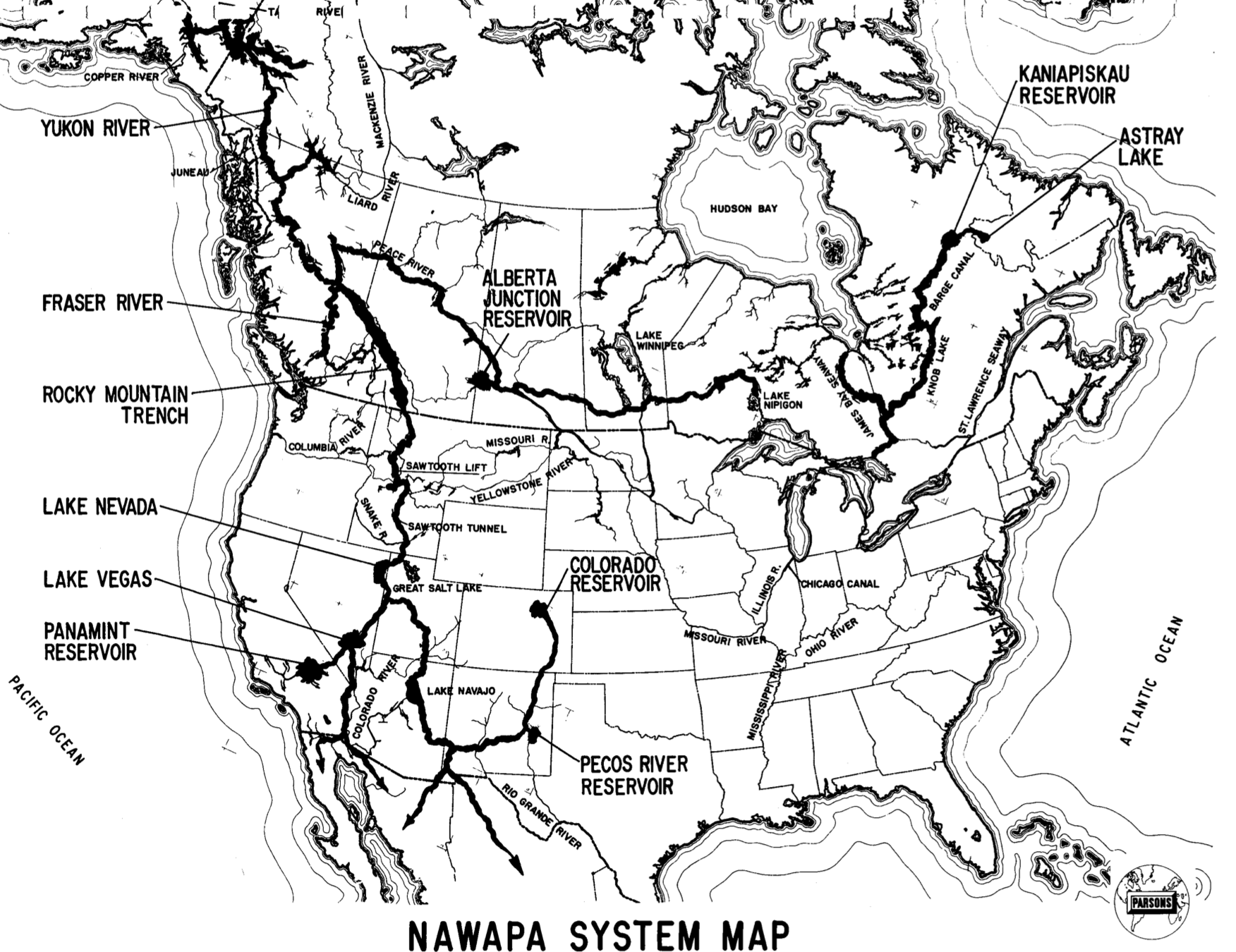
The failure of NAWAPA was largely due to its extreme scope and the impossible levels of federal, state, and private coordination it would require to even begin just one of its several hundred planned projects. NAWAPA’s failure also stems from its construction not being immediately necessary in the 60s or 70s, especially compared to basin states’ pleas in 2026 which overwhelmingly call for more water right now, and by any means necessary.
While NAWAPA was too ambitious for its time, its philosophy of amortizing the project’s costs over a twenty-year lifespan to make capital expenditures fall “well within the magnitude of the conceivable” fits nicely into a structure of WWPA in the 21st century.
However difficult it might be to bring something like the WWPA to life, the completion of the Central Arizona Project (CAP), despite its issues, serves as a reminder that these types of projects can be achieved even under poor circumstances.
The Central Arizona Project is a 336 mile diversion canal built to divert water from the Colorado River into parts of central and southern Arizona, providing water to almost one million acres of agricultural land. The CAP’s passing came after significant debate between both sides of the aisle, eventually succeeding after giving the federal government rights to 24.3% of power produced at the non-federal Navajo Generating Station and rounding out to a $4.4 billion cost. As the Navajo Generating Station compromise shows, it often isn’t enough for a project to serve a purpose and display the capability of paying dividends - local government agencies and various other stakeholders need to be aligned and given a cut of the proceeds to ensure even an inefficiently slow path to approval.
Despite being a massive success for the southwest, CAP still faces many issues to this day, largely because of the infamous Arizona v. California lawsuit.
This extended battle resulted in CAP water being designated as subordinate to California’s apportionment in times of water shortage, leading to consistently scarce flows and weak claims amidst persistent drought. Bringing in 1.5 million acre-feet of water from the Colorado River to Arizona each year, the CAP is still a small step towards total water independence, even at the state level. That number accounts for just 35% of Arizona’s annual water consumption, and there isn’t any existing infrastructure buildout looking to take the load off of CAP anytime soon.
The Tennessee Valley Authority (TVA) was chartered on May 18th 1933, with FDR intending for it to provide flood control for the Tennessee River, serve as a test for whether broad rural electrification across America was feasible, and to provide for the agricultural and industrial development of Tennessee and neighboring states’ regions.
The TVA Act gave this unprecedented new federal authority power to “acquire real estate for the construction of dams, reservoirs, transmission lines, power houses, and other structures” which allowed for large scale regional projects like the Tennessee River Plan and eventually a design for the IHS to improve transportation networks along the river. The TVA still exists nearly a century later, and was successful in the short term - electrifying public buildings, streets, and homes with a 55% cost reduction - and in the long term, keeping Tennessee functioning for millions.
An important throughline for both the TVA and CAP - two entirely unique structures - is the presence of a “great man” who fought tooth and nail to get the project across the finish line. It was surely easier for FDR to instate his New Deal as president and achieve this at a time when America needed stimulus, allowing for the creation of something as massive as TVA which would go on to benefit millions of Americans and multiple states.
For the CAP, this was “silent senator” Carl Hayden, whose congressional career spanned 57 years on account of him being such a beloved figure across Arizona. Despite Hayden’s goodwill amongst politicians and local communities, it still took years to achieve authorization of the Colorado River Basin Project Act of 1968, finally getting it to pass through state and non-state resistance, with an additional five years tacked on for construction to actually begin.
If Hayden were alive and in office today, he would face even more challenges and difficulties than the ones he had to conquer for the passing of something as crucial as the CAP.
The WWPA must take on a unique structure that hasn’t been tried before, taking the best from these historical examples and legal precedent to enact change over the lands it will govern.
Every new desalination or water conveyance project built and/or proposed in the United States must answer to the DOI, BOR, EPA, Fish and Wildlife Service, Bureau of Land Management, DOE, basin states, state level water and environmental agencies, coastal commissions, counties, irrigation districts, and numerous other stakeholders who all hold some level of veto power.
The WWPA Act would be best fit to wrap all of these agencies and stakeholders under the authority of the WWPA, allowing for more rapid buildout of the SWRO technology we need at scale, while eliminating the possibility of continued infrastructure buildout stalling or private standing. Each of these stakeholders obviously deserves a say in the matter, and it’s unlikely the WWPA could skirt around requirements of EISs or SIPs - the folding in of countless state and federal agencies only makes it so the WWPA could swiftly achieve approval for an initial phase buildout, avoiding a decade or more of delays while the southwest dies of thirst.
The WWPA would require legislative authorization, or Congress itself declaring NEPA satisfied for all of its phase projects similar to what was done with the Trans-Alaska Pipeline Authorization Act of 1973, which led to construction finishing in three years after four prior years spent being wrapped up with injunction. Beyond NEPA, WWPA would require express preemption of state-level environmental review, and halting all legal challenges. Nixon’s Trans-Alaska Pipeline Authorization Act was instrumental in getting this construction started thanks to its attention to state permitting, as it contained no amendments for the Alaska Department of Natural Resources, and Alaska Department of Fish and Game to regulate the buildout.
WWPA’s approval would also offer it designation as a sole lead agency, where federal authorizations like CWA’s section 401 & 404 would no longer be subject to years-long litigation without proper solutions provided, but an eighteen month window where any failure to critique environmental impacts would result in a green light for WWPA construction and clearance.
Federal authorizations are just one barrier, and WWPA would benefit from exclusive jurisdiction over all challenges - implementing a 60-day filing window, elimination of preliminary injunctions, and an expedited docket to prevent situations like Massachusetts’ failed Cape Wind offshore wind energy project, which spent roughly 15 years in a battle of local, state, and federal legal challenges.
Cape Wind was ultimately shot down in a federal appeals court in 2016 despite receiving conditional federal approval in 2010, on the grounds of the Bureau of Ocean Energy Management failing to comply with NEPA policy on measuring site-specific seafloor data. Eliminating preliminary injunctions is just as crucial to reforming the agencies themselves, as it’s been examined by the Institute for Progress that these injunctions are regularly used to “maximize economic leverage once construction has begun” via a method of ambushing, strategically inflicting the most harm towards projects once they’ve already been set in motion.
Giving up decades of environmental protections and legislative procedure for a project like this has a high moral cost, but not nearly as high as sitting back and doing nothing. Citizens do deserve the right to protest projects they believe are harmful to the environment, though until environmental protections can reasonably streamline the approval of perfectly safe projects, something must be done to sidestep these rulings. Just because the structuring of WWPA places it outside of traditional legislative action doesn’t mean that environmental standards won’t be enacted, but that these standards will be reviewed in a far more logical manner outside of the existing system that judges projects far too harshly.
Above all, the formation of the WWPA would set about substantive standards overhauls, reducing the amount of permitting, unnecessary time delays, and making it so CAA, CWA, and other legislative processes subservient to NEPA touch far fewer federal actions. Given a more likely path to success, WWPA could serve as an example of what our country can look like in the near future, leading to increased bipartisan support for permitting reform in the years to come.
WWPA’s institutional architecture depends greatly on financialization and incentives, though the aforementioned IHS provides a simple enough model that can be rolled out with the help of private-public partnerships.
Just as the IHS put up 90% of the funds, so would WWPA - the other 10% would fall to states and private corporations, essentially bidding amongst each other on the opportunity to construct these vast canals, solar farms, batteries, and desalination plants.
In a similar fashion to SpaceX’s reliance on government contracts - which emphasize milestone-based delivery to ensure productivity over pure profit seeking - to initialize markets, companies looking to significantly scale up production of solar, battery, and/or desalination plant production might rely on this new annual stimulus to form the corporations of the future. There are more than enough capable corporations in the U.S. to undertake a buildout of this scale, yet they are actively disincentivised from attempting projects of this scale.
For one, states would benefit from net-new water supply, making their responsibility for 10% of costs (spread out across 25-30 years) much more appetizing given the complete resolution of all scarcity. It is hard to understate just how much states would benefit, as the previously referenced 3-4 million acre-feet per year cut does little to truly dig into how complex interstate water politics can be, as well as how infrequently all stakeholders come to agreement.
Secondly, private corporations would stand to earn their money back given the government’s ability to pay these funds out over an extended timeline, and certainly fight amongst each other over the massive profits generated from a more bountiful land out west and power generated in excess. The legislature for WWPA partially exists, with programs like the Water Infrastructure Finance and Innovation Act (WIFIA) that offer long-term loans for private and public borrowers on wastewater, drinking water, and stormwater projects. WIFIA could be reformed or converted to accommodate these private corporations’ bids on desalinated water projects, with additional funding to increase its annual $2-2.5 billion of annual loan agreements.
In addition to standards reform and congressional fast tracking, the WWPA would need to implement a federally chartered water market that manages long-term water purchase contracts, inter-region trades, and manages the bookkeeping of all new water introduced. Despite the sophistication of our legislation, the southwest still lacks an efficient market on par with those like Australia’s Murray-Darling basin market, which sees billions in volume traded each year in a local market of water rights valued at roughly $21 billion.
The difference between today’s fragmented water markets and a WWPA-dictated federal market comes down to the accounting system. New legislation would give the WWPA authority over numerous interstate transfers and take-or-pay agreements, unifying these messy systems into one standard that can accurately measure the transfer of new and old water in the southwest. Additionally, this new market would ease concerns of farmers who fear participation in existing water markets due to concerns of potentially losing water rights.
Long-term water purchase contracts on the scale of millions of acre-feet of new water could easily earn them a return on their investment over a long enough time horizon - Carlsbad’s agreement with San Diego authorizes the city to pay $2,700/acre-foot for the roughly 50,000 AF output per year, equating to around $135 million in annual revenue.
Even accounting for cheaper prices at something like $500/acre-foot, the sheer volume of new water could increase annual revenues twenty or thirty fold for infrastructure backers.
As Handmer wrote in 2024, these estimates don’t even account for the potential of brine extraction at scale, returns on energy production, and the terraformed land value appreciating at a faster rate. In the case of the TVA, its existence has brought over 81,000 new jobs and driven additional capital investments of over $44 billion in just the past five years.
Much work has been done documenting what needs to be done to terraform Mars or the moon, but what about the extremely unforgiving environment of the American southwest that we already call home? If we can’t be bothered to make our own environments better functioning, more beautiful, and devoid of scarcity, how can we ever be expected to make even a small dent across galaxies?
Critics have pointed out the necessity of treating conservation and ecology as first class citizens in this project planning, a stipulation that wasn’t the case throughout the reclamation era. It’s reasonable to suggest that rapid changing of an environment might disturb existing wildlife, as attempts to re-green the southwest will surely affect the local ecology. But projects on the scale of WWPA aren’t set to reshape anything overnight, and they aren’t intending to. Even with examples like Handmer’s plans to terraform Nevada, it’s often just 1% of federal land that gets touched, not the 99.9% coverage you might expect from ambitious plans like these.
The WWPA comes from a necessity to reshape water markets and scarcity dynamics that have made millions of lives much harder than need be. One of the best recent examples of terraforming a harsh environment at scale comes from the Kubuqi Desert, where it took thirty years and a significant amount of trial and error for even one third of the desert to slowly become revitalized.
Humans have been terraforming Earth for thousands of years, intentionally or unintentionally, like with the case of the Salton Sea’s formation. America in particular has achieved wondrous feats of technological and scientific advancement - reducing infant mortality rates, ensuring relatively few go hungry via federal assistance, and growing into its ~$30 trillion GDP. Given federal outlays that come out to over $5 trillion or more each year, why shouldn’t the federal government dedicate a comparatively small amount of $25-30 billion to ambitious projects like WWPA? The need for additional funds may not even be required past a certain point, as examples like the TVA show that electricity sales and power revenue bonds can allow a new federal authority to subsist entirely on its own value creation, of which the WWPA would provide meaningfully.
America’s need for new mega projects has never been greater, and the opportunity costs of putting off saving our great rivers will only continue to grow. Tens of millions dealing with water scarcity in a country as developed as the United States should serve as a reminder that society is fragile, and our infrastructure must be maintained or built to adapt with our changing needs.